


Acne: what causes it and what really helps
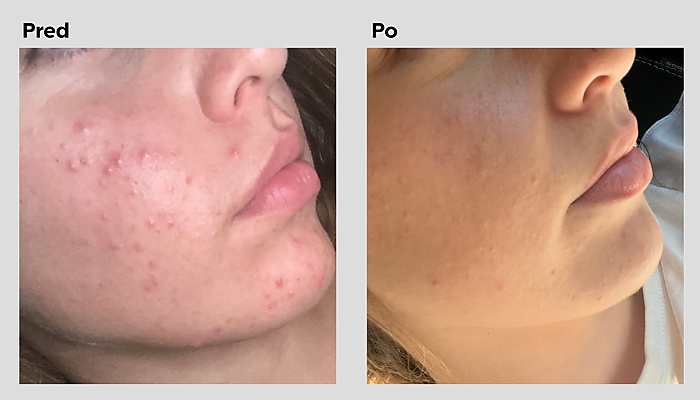
Acne: what causes it, its different forms and what really works
For mild and moderate acne, there are four active ingredients supported by clinical evidence, and one habit that undoes their effects. Acne develops through a combination of four mechanisms: increased sebum production, blocked pores, overgrowth of the bacterium Cutibacterium acnes and inflammation. Topical skincare is based on four proven ingredients: BHA, azelaic acid, niacinamide and retinoids. Squeezing causes permanent scars. Moderate to severe acne needs a dermatologist.
What is acne and why does it develop?
Acne is not simply a temporary teenage condition, but a chronic inflammatory disease of the pilosebaceous unit. It affects up to 85% of adolescents and 12 to 22% of adult women (Tan & Bhate, 2015). Some adults have persistent acne from puberty, while others develop it after the age of 25.
In the following four sections, we will look at its mechanism (four interconnected pathways that must come together), clinical forms (comedonal, papulopustular, nodulocystic, hormonal), the difference between adult and teenage acne and the specific features of acne corporis on the back, chest and shoulders.
The pathogenesis of acne: four mechanisms working together Acne has no single cause. The scientific literature describes four interconnected mechanisms that must come together for a visible lesion to develop on the skin (Williams et al., 2012).
Excess sebum production is the first mechanism. Sebocytes in the sebaceous glands respond to androgen signals: within sebocytes, testosterone is enzymatically converted into dihydrotestosterone (DHT) by 5α-reductase, and DHT is 5 to 10× more potent at the androgen receptor than testosterone itself (Ju et al., 2017); DHEA contributes as a precursor via the androstenedione pathway. A mechanistic hypothesis links insulin and IGF-1 to androgen signalling in sebocytes through mTORC1; however, clinical evidence for dietary effects is observational and inconsistent. This is why acne worsens in some groups with insulin resistance, polycystic ovaries or a high-glycaemic-index diet.
The second mechanism is pore blockage, or follicular hyperkeratinisation. Corneocytes (horny skin cells) in the pilosebaceous duct accumulate faster than the skin can shed them. This creates a microcomedone, the invisible precursor of an open comedone (blackhead) or a closed comedone.
Colonisation by Cutibacterium acnes is the third mechanism. This commensal bacterium (previously known as Propionibacterium acnes) is present on everyone's skin. The problem is not its presence, but its variant and biofilm. Phylotype IA1 is approximately 6× more abundant in acne lesions than in healthy skin (Dréno et al., 2018 review) and forms a biofilm that protects it from both antibiotics and the skin's own immune response.
Inflammation does not wait until a lesion becomes visible. C. acnes activates TLR2 (Toll-like receptor 2) in keratinocytes and sebocytes, triggering a cytokine cascade (IL-1α, IL-8, TNF-α) and neutrophil chemotaxis. This inflammatory response appears to precede a visible papule by tens of hours (histological findings, Knutsen-Larson et al., 2012). When the follicular wall eventually ruptures, sebum and bacteria enter the dermis and inflammation spreads. These four mechanisms act simultaneously, not one after another. Topical skincare targeting only one therefore tends to be only partly effective.
Types of acne: comedonal, papulopustular, nodulocystic, hormonal
The single term acne covers a spectrum of clinical forms. There are four main types, which differ in morphology, distribution and prognosis.
Comedonal acne is the mildest form. It consists of open comedones (blackheads, which are oxidised sebum at the surface of an open pore) and closed comedones (white lesions beneath the skin). There is no inflammation. Typical distribution: forehead, nose and chin (T-zone).
Papulopustular acne is the most common form. It involves papules (inflamed bumps) and pustules (pus-filled lesions) alongside comedones. This is the form that responds to most topical active ingredients.
Nodulocystic acne is a severe form with deep, painful nodules and abscesses, commonly known as acne under the skin. The risk of scarring is high. Nodulocystic forms and hormonal acne resistant to topical skincare need a dermatologist and are indications for oral isotretinoin or anti-androgen therapy (Zaenglein et al., 2016). Topical cosmetics will not resolve them, and an accurate diagnosis is essential in these cases.
Neonatal acne (acne neonatorum) is a separate category. It involves neonatal cephalic pustulosis in the first 6 weeks of life, associated with maternal androgens and the yeast Malassezia. It clears spontaneously by 3 months and does not need active treatment. Persistent acne in a baby after 3 months warrants a consultation with a paediatrician or paediatric dermatologist.
Hormonal acne is a descriptive term for adult acne distributed around the jawline, chin and neck. In adults, the inflammatory (papulopustular) type predominates in approximately 58% of cases (Bagatin et al., 2019). In hormonal acne, the sensitivity of androgen receptors on sebocytes matters more than the absolute level of androgens in the blood. Early intervention is worthwhile for post-inflammatory hyperpigmentation and scarring, as delayed treatment worsens the outcome.
Acne can sometimes be confused with rosacea (papulopustular rosacea has a similar morphology, but lacks comedones, and the face tends to be sensitive with visible blood vessels) or perioral dermatitis (lesions concentrated around the mouth and nose, often triggered by topical steroids). A dermatologist can identify facial breakouts that do not respond to standard skincare.
Adult vs teenage acne: why adult women still struggle with acne
Acne does not leave adolescents on their 18th birthday. 12 to 22% of adult women have persistent or late-onset acne (Tan & Bhate, 2015). Its psychosocial impact in adult women has been documented as comparable to that of a chronic systemic disease. The mechanism of adult acne differs from that of teenage acne.
During puberty, there is an absolute increase in androgens; in adulthood, androgen receptor sensitivity is more relevant. Testosterone levels may be normal, but sebocytes respond more strongly. Add insulin resistance, amplified IGF-1 signalling, the cortisol axis during chronic stress, and fluctuations in oestradiol and progesterone during the menstrual cycle. The result is the typical pattern of adult female acne: cyclical flare-ups in the luteal phase, distribution across the lower third of the face, chin and jawline, often inflamed and painful.
If hirsutism, an irregular menstrual cycle or other signs of hormonal imbalance are also present, an endocrinological and gynaecological assessment is advisable. This may be polycystic ovary syndrome (PCOS) or another condition that topical cosmetics cannot address. Home skincare can only ease it, not resolve it.
An important difference from puberty: with adult acne, the skin is more often drier, more sensitive and has a weakened barrier. Aggressive oil removal and drying high-street “anti-acne” products are counterproductive here. A gentle routine with a few targeted active ingredients works better than intensive cleansing and irritating exfoliants.
Acne on the back and décolletage (acne corporis)
Acne does not only develop on the face. The back, chest, shoulders and décolletage have a higher density of sebaceous glands than the rest of the body and are exposed to friction: sports straps, backpacks, tight vests and prolonged sweating in non-breathable clothing. This leads to acne corporis and its specific subtype, acne mechanica: acne triggered by pressure and friction combined with sweat.
Treatment requires a broader approach because the area is larger. Body washes with BHA or glycolic acid (1 to 2× daily) can do much of the work that serums do on the face. Looser, breathable clothing reduces friction. Change out of your sweaty vest as soon as possible after exercise, because sweat in contact with skin under pressure creates a breeding ground for bacteria.
Large, painful, cystic lesions on the back or chest that do not respond to topical skincare warrant a dermatological assessment. They are more often resistant to topical treatment and respond better to oral therapy.
Acne treatment: active ingredients, a daily routine and the Dulcia approach
For mild and moderate forms, four ingredients stand above the rest: salicylic acid, azelaic acid, niacinamide and retinoids. In moderately severe cases, dermatological treatment (oral isotretinoin, anti-androgen therapy) complements and sometimes replaces them; this is not home skincare.
Evidence-backed active ingredients: BHA, azelaic acid, niacinamide, retinoids
| Active ingredient | Concentration | Mechanism | Clinical evidence |
|---|---|---|---|
| Salicylic acid (BHA) | 0.5–2% | Oil-soluble, penetrates pores, keratolytic and mildly anti-inflammatory. | 2% SA hydrogel is no less effective than adapalene 0.1% after 12 weeks (n=200): inflammatory lesion reduction of 58.6% vs. 62% (Ye et al., 2024). |
| Azelaic acid | 10% cosmetic / 15–20% prescription | Anti-comedogenic, antibacterial, anti-inflammatory, depigmenting and selectively cytotoxic to hyperactive melanocytes. | In a 12-week RCT (Iraji 2007, n≈60), 15% azelaic acid reduced inflammatory lesions by ~70% from baseline; compared with 5% benzoyl peroxide, it showed similar efficacy with better tolerability. The study was not formally designed as a non-inferiority trial (Iraji et al., 2007). |
| Niacinamide | 2–5% | Regulates sebum production and suppresses the cytokine response via TLR2. | 4% niacinamide is comparably effective to 1% clindamycin after 8 weeks for moderate inflammatory acne (n=80) (Khodaeiani et al., 2013). |
| Retinoids retinol, OTC adapalene |
Retinol 0.1–1%; adapalene 0.1% | Normalise follicular keratinisation and inhibit microcomedone formation by binding to RAR-β and RAR-γ. | Adapalene 0.1% gel reduces microcomedone counts by ~80% in 12 weeks (Czernielewski et al., 2001); topical retinoids reduce lesions by 40–70% in 12 weeks (Eichenfield et al., 2021). |
The AAD guidelines (Zaenglein 2016) recommend a combination of a topical retinoid and benzoyl peroxide as first-line topical therapy for mild to moderate acne. BPO is available in pharmacies (2.5–5%), but it can bleach fabrics and is more irritating to sensitive skin than azelaic acid or niacinamide.
How you combine active ingredients determines whether your routine is effective or irritating. For most people, two active ingredients in a consistent routine are enough; more does not mean faster results. Safe pairings: niacinamide (morning) + azelaic acid (evening), or niacinamide (daily) + a retinoid (2 to 3× weekly). It is best to avoid applying BHA and a retinoid on the same evening: both reduce cohesion in the stratum corneum, and their combined keratolytic effect can increase irritation and transepidermal water loss in some skin types. At least 8 to 12 weeks are needed to assess the response to any of these ingredients; assessing sooner leads to unnecessary changes in your routine.
Squeezing acne spots and the scars left behind
Mechanically extracting acne lesions with your fingers is the most common trigger of lasting damage. Pressure disrupts the integrity of the follicular wall, sebum and bacteria enter the deeper dermis, and macrophages activate matrix metalloproteinases (MMP-1 and MMP-9), which break down collagen faster than fibroblasts can replace it.
The result is permanent atrophic scarring: ice-pick (narrow and deep), rolling (wide and shallow) or boxcar (with sharply defined edges). In a clinical cohort of 185 patients at a specialist centre (Layton et al., 1994), 95% of men and 85% of women developed scars; more recent population estimates are lower and depend on the definition of a scar (Layton et al., 1994; Connolly et al., 2017).
A second reason not to squeeze acne spots is that it delays effective treatment. An observational study of 185 patients found an association between delayed adequate treatment and worse scarring, although acne severity itself predicts both treatment delay and scarring (Layton et al., 1994). Hydrocolloid patches still have a valid role here, but not as a “treatment”.
They absorb exudate from an open lesion, reduce bacterial entry and physically prevent mechanical irritation of the lesion overnight.
They prevent mechanical trauma rather than address the pathogenesis. They are of no use for comedones (blackheads and white lesions). Post-inflammatory hyperpigmentation (PIH), meaning brownish to grey marks where lesions have healed, is a separate topic requiring its own active skincare. In darker phototypes (III to V), the risk of PIH after each inflammatory episode is higher, making prevention even more important. Read more in our article on pigmentation marks.
A daily routine for acne-prone skin
Two principles apply to acne: consistency over experimentation, and gentleness over aggression. Paradoxically, skin with a weakened barrier produces more sebum and responds less well to active ingredients.
Morning:
1. Gentle cleansing with a sulphate-free gel (pH 4.5 to 5.5).
2. Niacinamide serum (2 to 5%): daily support for sebum regulation and reducing inflammation.
3. A lightweight, non-comedogenic moisturiser for acne-prone skin, without heavy oils or silicones.
4. Mineral SPF 30+ (zinc oxide + titanium dioxide), every day, including in winter and under make-up.
Evening:
1. Remove make-up (micellar water, or an oil cleanser for waterproof make-up), then cleanse again with a pH-balanced gel.
2. Active ingredient: BHA or azelaic acid (alternate days; do not combine on the same evening).
3. A lightweight cream to lock in moisture. 2x weekly (from week 5 of the adjustment period): retinol in the evening instead of BHA or azelaic acid.
Apply it using the sandwich technique (a thin layer of cream first, then retinol, then a second layer of cream) to improve tolerability for sensitive skin. If there is no improvement after 8 to 12 weeks of a consistent routine, see a dermatologist. This article is educational and does not replace professional advice. Moderate to severe forms require a combination with prescription topical retinoic acid, an antibiotic or oral isotretinoin. These treatments are not home skincare (Eichenfield et al., 2021).
At Dulcia: how we developed the Plus acne range
When developing the Plus — First Aid for Acne range, we selected active ingredients with evidence for targeting individual acne mechanisms: niacinamide (Khodaeiani 2013), azelaic acid (Iraji 2007) and zinc PCA (Yang et al., 2017). We complemented them with zinc oxide, an AHA complex for gentle chemical exfoliation, shikimic acid (a gentle keratolytic) and a prebiotic complex to support commensal strains in the microbiome.
The specific concentrations in our formula are tailored for cosmetic use and are not equivalent to the doses in the cited studies; we do not dry the skin out in an attempt to make it bacteria-free. Find out more about azelaic acid on our ingredients page.
Frequently asked questions
Do hydrocolloid patches help with acne?
Yes, but as protection for an open lesion and a way to prevent mechanical pressure, not as a treatment. Hydrocolloid patches absorb exudate, reduce bacterial entry and physically prevent mechanical irritation of the lesion overnight; this is a valid use after extraction. However, they do not address the pathogenesis of acne: sebum production, hyperkeratinisation, C. acnes biofilm or inflammation. They are of no use for comedonal lesions (blackheads and white lesions). Apply them over inflamed, open spots overnight; topical active ingredients belong in your daily routine.
I have spots on my back too - is it acne?
Probably yes; this is known as acne corporis. The back, chest and shoulders have a higher density of sebaceous glands and are exposed to friction (sports straps, backpacks, tight clothing), a combination that encourages acne. Body skincare requires a broader approach because of the larger area: a body wash with BHA or glycolic acid 1 to 2× daily, looser, breathable clothing, and changing out of a sweaty vest as soon as possible after exercise. If the lesions are cystic or painful, consult a dermatologist.
Can I wear make-up if I have acne?
Yes, if it is non-comedogenic (labelled “non-comedogenic” or with an ingredient list free from heavy oils and silicones). Make-up itself does not worsen acne; inadequate removal and dirty brushes do. Wash brushes and sponges at least once a week; never sleep in make-up. Mineral powders with zinc oxide may also have a mild anti-inflammatory and mattifying effect. During active inflammation, choose tinted creams with SPF over full coverage.
Is one active ingredient enough, or should I use several at once?
For mild and moderate acne, alternating is better than layering. An aggressive combination dries out the skin, which compensates by producing more sebum, prolonging inflammation. Safe pairings: niacinamide in the morning + azelaic acid in the evening; niacinamide + retinol on different days.
Can diet help with acne?
Dairy products (especially skimmed milk) and a high-glycaemic-index diet correlate with worse acne in observational studies; the effect involves IGF-1 and insulin, which amplify androgen signalling in sebocytes (Ju et al., 2017). This mechanism is a hypothesis; in vivo evidence in humans is limited. For people with hormonal acne, an 8- to 12-week trial of reducing dairy products and refined sugars makes sense. However, this is not a treatment; for most patients, dietary changes are a complementary approach, not the primary intervention.
When should I see a dermatologist about acne?
For nodulocystic forms (deep, painful nodules), acne with ongoing scarring, hormonal acne resistant to a 12-week topical routine, acne in a child beyond the neonatal period (3 months and older), and acne associated with hirsutism or an irregular cycle (possible PCOS). A dermatologist will consider oral isotretinoin, anti-androgen therapy (spironolactone, contraception) or procedural treatment. Cosmetic skincare cannot replace these treatments, but it can complement them.
Are home remedies (lemon, toothpaste, alcohol) safe for acne?
No. Lemon juice contains furanocoumarins and psoralens, which cause phytophotodermatitis after UV exposure: burns with long-lasting pigmentation. Toothpaste dries out the skin and contains SLS and mint (highly irritating to the skin microbiome). Alcohol changes the pH of the skin's protective mantle and paradoxically increases sebum production as a compensatory response. These “tips” not only fail to help, but actively disrupt the skin barrier and often cause the very post-inflammatory pigmentation that remains after the original spot.
Conclusion
For mild and moderate acne, a well-designed routine with 1–2 proven active ingredients, 8 to 12 weeks of patience and SPF is enough.
Squeezing damages the skin permanently.
Moderate to severe forms need a dermatologist. For mild and moderate forms, we developed the Plus — First Aid for Acne: range with azelaic acid, niacinamide, zinc and prebiotics, formulated for an 8–12-week routine.
Sources
Williams HC, Dellavalle RP, Garner S. “Acne vulgaris.” Lancet 2012; 379(9813): 361–372. PMID: 21880356. https://pubmed.ncbi.nlm.nih.gov/21880356/
Dréno B, Pécastaings S, Corvec S, Veraldi S, Khammari A, Roques C. “Cutibacterium acnes (Propionibacterium acnes) and acne vulgaris: a brief look at the latest updates.” J Eur Acad Dermatol Venereol 2018; 32(S2): 5–14. PMID: 29894579. https://pubmed.ncbi.nlm.nih.gov/29894579/
Ye Y, Wang B, Liu D, et al. “2% supramolecular salicylic acid hydrogel vs. adapalene gel in mild to moderate acne vulgaris treatment: a multicenter, randomized, evaluator-blind, parallel-controlled trial.” J Cosmet Dermatol 2024. PMID: 38590107. https://pubmed.ncbi.nlm.nih.gov/38590107/
Iraji F, Sadeghinia A, Shahmoradi Z, Siadat AH, Jooya A. “Efficacy of topical azelaic acid gel in the treatment of mild-moderate acne vulgaris.” Indian J Dermatol Venereol Leprol 2007; 73(2): 94–96. PMID: 17456913. https://pubmed.ncbi.nlm.nih.gov/17456913/
Khodaeiani E, Fouladi RF, Amirnia M, Saeidi M, Karimi ER. “Topical 4% nicotinamide vs. 1% clindamycin in moderate inflammatory acne vulgaris.” Int J Dermatol 2013; 52(8): 999–1004. PMID: 23786503. https://pubmed.ncbi.nlm.nih.gov/23786503/
Czernielewski J, Michel S, Bouclier M, Baker M, Hensby JC. “Adapalene biochemistry and the evolution of a new topical retinoid for treatment of acne.” J Eur Acad Dermatol Venereol 2001; 15(S3): 5–12. PMID: 11843234. https://pubmed.ncbi.nlm.nih.gov/11843234/
Bagatin E, Freitas THP, Machado MCR, et al. “Adult female acne: a guide to clinical practice.” An Bras Dermatol 2019; 94(1): 62–75. PMID: 30726466. https://pubmed.ncbi.nlm.nih.gov/30726466/
Tan JKL, Bhate K. “A global perspective on the epidemiology of acne.” Br J Dermatol 2015; 172(S1): 3–12. PMID: 25597339. https://pubmed.ncbi.nlm.nih.gov/25597339/
Zaenglein AL, Pathy AL, Schlosser BJ, et al. “Guidelines of care for the management of acne vulgaris.” J Am Acad Dermatol 2016; 74(5): 945–973.e33. PMID: 26897386. https://pubmed.ncbi.nlm.nih.gov/26897386/
Connolly D, Vu HL, Mariwalla K, Saedi N. “Acne Scarring — Pathogenesis, Evaluation, and Treatment Options.” J Clin Aesthet Dermatol 2017; 10(9): 12–23. PMID: 29344322. https://pubmed.ncbi.nlm.nih.gov/29344322/
Ju Q, Tao T, Hu T, Karadağ AS, Al-Khuzaei S, Chen W. “Sex hormones and acne.” Clin Dermatol 2017; 35(2): 130–137. PMID: 28274349. https://pubmed.ncbi.nlm.nih.gov/28274349/
Layton AM, Henderson CA, Cunliffe WJ. “A clinical evaluation of acne scarring and its incidence.” Clin Exp Dermatol 1994; 19(4): 303–308. PMID: 7955470. https://pubmed.ncbi.nlm.nih.gov/7955470/
Eichenfield DZ, Sprague J, Eichenfield LF. “Management of Acne Vulgaris: A Review.” JAMA 2021; 326(20): 2055–2067. PMID: 34812859. https://pubmed.ncbi.nlm.nih.gov/34812859/
Yang JH, Yoon JY, Kwon HH, Min S, Moon J, Suh DH. “Seeking new acne treatment from natural products, devices and synthetic drug discovery.” Dermatoendocrinol 2017; 9(1): e1356520. PMID: 29484100. https://pubmed.ncbi.nlm.nih.gov/29484100/
Knutsen-Larson S, Dawson AL, Dunnick CA, Dellavalle RP. “Acne vulgaris: pathogenesis, treatment, and needs assessment.” Dermatol Clin 2012; 30(1): 99–106. PMID: 22117871. https://pubmed.ncbi.nlm.nih.gov/22117871/


