


No matches were found for your search
Show all resultsYour cart is empty.

Ceramide Complex™, Hyaluronic Acid
Removes make-up, cleanses and hydrates in one wash. Removes make-up and impurities, leaving skin clean, fresh and comfortable, without tightness. Contains Ceramide Complex™ and hyaluronic acid.
Need some advice?
Explore our guide or feel free to contact us, we are here for you!
This hydrating cleansing gel effectively removes impurities and make-up, hydrates the skin and leaves it clean, fresh and comfortable, without any unpleasant tightness. This luxurious gel cleanses, removes make-up and hydrates in one step, and is also popular with men and young people. It contains BIO green tea hydrolate, complemented by two active ingredients, Ceramide Complex™ and hyaluronic acid, to help keep skin hydrated. A blend of gentle, plant-derived surfactants cleanses the skin. AquaCacteen™ prickly pear cactus extract soothes the skin, while zinc and prebiotics support a healthy skin microbiome. This lightweight, non-sticky gel contains no plant oils and is made with vegan, natural ingredients.
The 3-in-1 Hydrating Facial Cleansing Gel is suitable for normal, dry, oily and combination skin. The gel is particularly well suited to:
The cleansing base is sulphate-free and certified for natural cosmetics according to ECOCERT and COSMOS standards.
Apply to slightly damp skin and massage in circular motions to loosen make-up and impurities. Then rinse thoroughly with water. Use morning and evening, before applying the rest of your skincare.
The packaging dispenses the product with care; simply press to dispense only as much as you need.
Aqua, Camellia Sinensis Leaf Extract, Glycerin, Sodium Hyaluronate, Inulin, Fructose, Glucose, Cellulose Gum, Cellulose, Xanthan Gum, Sodium Cocoamphoacetate (and) Glycerin (and) Lauryl Glucoside (and) Sodium Cocoyl Glutamate (and) Sodium Lauryl Glucose Carboxylate, Polyglyceryl-4 Caprate, Phospholipids, Sphingolipids, Opuntia Ficus-Indica Stem Extract (and) Glycerin (and) Aqua, Zinc PCA, Dehydroacetic Acid, Benzoic Acid, Sorbic Acid, Benzyl Alcohol, Citric Acid
Fresh BIO green tea hydrolat is obtained from organically grown fresh green tea leaves. It is rich in amino acids, minerals and polyphenols – antioxidants. It contains a high concentration of L-theanine and a low concentration of caffeine. This organic extract is obtained by steam distillation of fresh leaves from the Camellia sinensis plant, which originates from Asia and is known for its traditional uses in skincare. Unlike synthetic antioxidants, this hydrolat is natural, free from chemical additives, and retains a broad spectrum of bioactive compounds directly from the plant.
Its mechanism of action includes intensive skin hydration thanks to amino acids and minerals, restoration of the skin barrier through polyphenols, and powerful antioxidant effects from EGCG (Epigallocatechin gallate), which protects against DNA damage caused by UV radiation and free radicals. It has anti-inflammatory and soothing properties, reduces redness and puffiness, and supports the repair of collagen fibres, improving elasticity and reducing wrinkles. It has antibacterial properties, cleanses pores and gently exfoliates. The recommended concentration in cosmetic formulations is 5-20 % for optimal effects without irritation.
It is recommended for dry, sensitive, oily, acne-prone, dehydrated and mature skin. For dry and dehydrated skin, it provides hydration and restores the skin barrier; for sensitive skin, it soothes inflammation and redness; for oily and acne-prone skin, it regulates sebum and fights bacteria; and for mature skin, it protects against ageing and improves elasticity. It is ideal for all skin types exposed to environmental stress, including UV radiation.
A study published in the Journal of Nutritional Biochemistry (2009) demonstrated that EGCG at a concentration of 10 μM inhibits UVB-induced cell apoptosis and reduces DNA damage by 68 % in human keratinocytes. Another study in Phytotherapy Research (2018) reports that topical application of green tea extract at a concentration of 5 % reduced inflammatory markers (IL-6, TNF-α) by 45 % after 4 weeks in patients with acne.
This cosmetic raw material is a blend of plant-derived surfactants, obtained primarily from coconut and palm oil, glucose and sodium glutamate. It also contains synthetic components such as sodium monochloroacetate and monochloroacetic acid, together with aminoethylethanolamine. The manufacturer, BASF, supplies it as a ready-made, sulphate-free, non-ethoxylated blend, certified for natural cosmetics under Ecocert and Cosmos standards. It is a clear to pale yellow, water-soluble liquid with a characteristic detergent scent and an active matter content of approximately 30 %. It is produced by combining amphoteric, non-ionic and anionic surfactants, ensuring stability and ease of use in formulations without the need for heating.
The blend acts as a gentle cleansing surfactant with an amphoteric structure that allows micelles to form with both positive and negative charges on the molecular head. It cleanses effectively by mixing water with oil, removing dirt, grease and residues without drying out the skin. It produces a rich, creamy lather with excellent stability that rinses off easily, even in hard water. At a concentration of 20-50 %, it serves as a primary surfactant, increases viscosity without thickeners and helps condition the hair. It is compatible with anionic, non-ionic and amphoteric surfactants, improving overall cleansing performance.
It is recommended for dry, sensitive, dehydrated and irritated skin, as well as oily and acne-prone skin, as it does not strip away natural moisture or compromise the skin barrier. It is ideal for baby products, shampoos, shower gels, soaps and facial cleansing emulsions. Its gentle formula makes it suitable for all age groups, including infants, and for mature skin prone to dryness. Specifically, it is used in formulations with a final pH of 4-5.5 for optimal viscosity and stability.
A study confirms its exceptional mildness: in patch tests and eye irritation tests, it showed minimal irritation on sensitive skin, with only 3 out of 11 atopic subjects showing a positive reaction to a 5 % concentration of Sodium Cocoamphoacetate (Safety Assessment of Amphoacetates as Used in Cosmetics, CIR, 2023). Further data show a critical micelle concentration of 8.2 mM at 25 °C with an aggregation number of 62, supporting effective cleansing without harshness (Ataman Chemicals).
Produced from coconut oil, it is a natural water-binding substance that also occurs in the body. Its main properties are hydrating and restorative, and it creates a protective barrier against dryness. It leaves a soft, silky, supple layer on the skin and prevents moisture loss, helping to build the skin's protective barrier. Its concentration in the finished product is important. In addition to coconut oil, it can also be obtained from vegetable oils such as palm or soya oil through hydrolysis, or as a by-product of biodiesel production. It belongs to a group of humectants that can bind up to 1000 times their weight in water from their surroundings, ensuring long-lasting hydration. It occurs naturally in the skin as part of the natural moisturising factors (NMF) that make up the outermost layer of the epidermis. It can also be produced synthetically for greater purity in cosmetics, although the natural form is preferred in organic products. It supports skin elasticity by improving the penetration of other active ingredients into deeper layers.
As a humectant, it intensely moisturises the skin by attracting and binding water molecules from the environment and the lower layers of the skin. It restores the skin barrier by forming a protective film that minimises transepidermal water loss (TEWL) and protects against environmental factors such as dry air and pollution. It has a mild soothing effect on irritated skin and supports its regeneration. At concentrations of 5-20 % in serums or creams, it significantly increases hydration; with 10 % glycerine, moisture loss was reduced by 25 % after 24 hours (Journal of Cosmetic Science, 2018). At lower concentrations (below 5 %), it acts as a solubiliser for essential oils.
It is recommended for dry, dehydrated, sensitive and mature skin, where it prevents wrinkles caused by dehydration. At low concentrations, it is also suitable for oily and acne-prone skin, as it does not leave a greasy film and regulates hydration without clogging pores. It is ideal for atopic dermatitis or eczema, where it supports barrier repair. During the winter months or in dry environments, it is invaluable for all skin types, especially for children and older people with thin skin.
A study published in the International Journal of Cosmetic Science (2015) showed that a 20 % glycerine solution increased skin hydration by 40 % after 7 days of application in women with dry skin. Further research in the British Journal of Dermatology (2008) reports that glycerine at a concentration of 6 %, combined with lipids, restored the skin barrier 30 % faster than a placebo in patients with eczema.
Ceramides are lipids that naturally occur in large amounts in cell membranes and are among the main components of the upper layers of our skin. As we age, our skin loses these lipids. Lipids protect our skin against free radicals and microorganisms, forming part of the skin barrier. They retain the skin’s natural moisture, prevent water loss from deeper layers and provide essential hydration, improving its ability to retain moisture. They help prevent skin ageing and maintain a youthful appearance. A ceramide complex stimulates the skin to produce more collagen. Ceramides strengthen the skin’s protective function and improve its ability to retain moisture, helping to protect it against external factors such as sunlight and air pollution. They are produced naturally in the skin, but cosmetics use synthetic forms or plant-derived phytoceramides, such as those obtained from wheat germ, allowing them to be widely used in organic extracts.
Their mechanism of action includes moisturising by retaining water in the skin and reducing transepidermal water loss (TEWL), restoring the skin barrier by acting like glue between cells in the stratum corneum, providing antioxidant protection against free radicals and soothing irritated skin. They strengthen the lipid structure, improving elasticity and suppleness. At concentrations commonly used in cosmetics (0,1-1 %), they significantly support hydration and regeneration without irritation.
They are recommended for dry, dehydrated, sensitive and irritated skin, as well as mature skin with visible signs of ageing, eczema or psoriasis. They are ideal for people exposed to harsh skincare treatments, cold, pollution or UV radiation, helping to restore the barrier and improve tolerance to active ingredients such as retinoids.
A study involving 60 volunteers with dry skin showed that taking ceramides orally for 60 days increased skin hydration, elasticity and smoothness, and reduced TEWL, roughness and wrinkling compared with a placebo (Enori.sk, study cited in the source). Clinical tests on CeramosidesTM demonstrated improvements in skin elasticity and hydration after just 15 days.
Opuntia ficus-indica is a succulent cactus native to Mexico, also known as prickly pear, nopal or Indian fig. The use of prickly pear as food and medicine dates back to the Aztecs of pre-Hispanic Mexico, who revered it as a sacred plant. Prickly pear contains piscidic acid, an excellent iron chelator. It also contains vitamins A, B1, B2, B3 and C, and the minerals potassium, calcium and magnesium. This is an organic BIO ingredient from Fair trade production with ECOCERT, NATURE and COSMOS certifications, obtained by extracting the plant's stems using glycerine and water to preserve its bioactive compounds.
This ingredient blocks the release of stress markers from sensory nerve cells in the skin, helping to soothe the skin and relieve irritation. It has excellent moisturising properties thanks to its high content of water-binding compounds, including polysaccharides and glycerine. It soothes and firms the skin and protects it from UV damage. In vitro tests demonstrated inhibition of the release of stress factors, reducing skin sensitivity and reactivity. In vivo tests confirmed a soothing effect after shaving, long-term relief from irritation, firming of UV-damaged skin and hydration even in rinse-off products. Clinical studies on men and women showed exceptional skin-soothing and firming effects. The recommended concentration in formulations is 1-3 % for optimal results.
It is particularly recommended for sensitive, irritated, dry and dehydrated skin, as well as skin exposed to stress or UV radiation, or after hair removal. It is also suitable for reactive skin prone to redness, oily skin prone to inflammation and mature skin in need of firming and hydration. It is well suited to serums, creams, aftershave gels and rinse-off cleansers.
A study published in the Journal of Ethnopharmacology (2010) demonstrated that Opuntia ficus-indica extract at a concentration of 2 % reduced the release of neuropeptides (stress markers) by 68 % in human-derived nerve cells in vitro, significantly soothing reactive skin. Another clinical study in the International Journal of Cosmetic Science (2012), involving 20 volunteers, showed that applying a 1 % solution for 28 days increased skin hydration by 25 % and reduced redness by 40 %, as measured with a spectrophotometer. These results confirm its effectiveness in long-term skincare.
Polyglyceryl-4 Caprate is a gentle emulsifying ingredient and cleansing agent often used in cosmetics and personal care products, particularly skincare. It is an ester of polyglycerol and capric acid, derived from fatty acids. Its natural origin and mildness make it popular in product ranges for sensitive skin and eco-friendly cosmetics. This ingredient is obtained from plant oils, such as coconut or palm oil, by esterifying polyglycerol-4 with capric acid, ensuring its entirely natural character without synthetic chemicals. In organic cosmetics, it is valued as a 100 % natural, non-ionic surfactant that is biodegradable and environmentally friendly, making it ideal for certified organic products.
It works primarily through its gentle cleansing action, dissolving oils, make-up and impurities without disrupting the skin barrier, helping to hydrate the skin and prevent tightness. As a non-ionic emulsifier, it stabilises emulsions in products, combining water and oils into uniform textures, typically at concentrations of 1-5 % in cleansers and 2-10 % in emulsions. It also soothes the skin by leaving its natural lipids intact, supports hydration and helps to restore the barrier by minimising transepidermal water loss (TEWL). These properties were confirmed in a study published in the International Journal of Cosmetic Science (2018), in which a concentration of 3 % Polyglyceryl-4 Caprate in micellar water reduced TEWL by 25 % after 4 weeks of use in participants with sensitive skin, compared with a placebo.
We recommend it for sensitive, dry, dehydrated and oily skin, including acne-prone and mature skin, where gentle cleansing without drying is essential. It is ideal for people with eczema or rosacea, as it reduces the risk of irritation. Avoid use only on extremely sensitive skin with open wounds.
It is used in micellar waters, cleansing milks, make-up-removing oils and hydrating gels, where it provides a smooth texture and effectively removes impurities while retaining moisture. Its environmentally friendly biodegradability makes it a popular choice in natural cosmetics, where it contributes to sustainable skincare without compromising on effectiveness.
First of all, we would like to explain that cosmetic products do need preservatives to prevent microbial growth, product spoilage and potential skin infections that may have long-term adverse effects on your skin. Protecting the product from spoilage, and therefore protecting you, is extremely important. It is equally important to us that the preservative system is mild and gentle and has absolutely no negative impact on your health. Our packaging also plays a significant role in gentle preservation, allowing us to use the lowest concentration of the preservative blend. This blend consists of organic acids and benzyl alcohol obtained through natural processes without synthetic chemicals, in accordance with strict organic farming and certification standards. The components originate from plant sources or microbial processes: dehydroacetic acid is produced through glucose fermentation, benzoic and sorbic acids are isolated from berries or strawberries, and benzyl alcohol from plant essential oils such as ylang-ylang or jasmine. These organic extracts are certified as natural and organic, free from GMOs and pesticides.
The organic preservative blend works by acidifying its environment, lowering the pH to 4-5,5, a level that inhibits the growth of bacteria, yeasts and moulds. The synergistic effect of the blend ensures broad-spectrum protection: dehydroacetic acid inhibits fungal enzymes, benzoic and sorbic acids penetrate the cell membranes of microorganisms and disrupt their metabolism, while benzyl alcohol disrupts cell walls. The typical concentration is 0,2-1 %, depending on the formulation, which minimises the potential for irritation when used with airless packaging. This system contains no parabens, formaldehyde releasers or isothiazolinones, protecting the integrity of natural ingredients without compromising stability.
We recommend this blend for all skin types – dry, sensitive, oily, acne-prone, dehydrated or mature – particularly in organic cosmetics for families with children and people with allergies. It is ideal for those looking for a gentle alternative to synthetic preservatives, without the risk of sensitisation at low concentrations. A study published in the International Journal of Cosmetic Science (2014) confirms that a blend of dehydroacetic acid (0,5 %), benzoic acid (0,3 %) and benzyl alcohol (0,2 %) achieved a 99,9 % reduction in Staphylococcus aureus and Candida albicans in emulsions at pH 5,5 without affecting the product's rheology (Darr et al., 2014). Further research in the Journal of Applied Microbiology (2009) showed that sorbic acid used in combination (0,1 %) produced a 4 log reduction in Aspergillus niger within 7 days.
Dulcia natural uses a natural, environmentally friendly system to protect cosmetic products that complies with Ecocert and COSMOS standards. It has been developed to reduce the risk of bacterial contamination. It is designed to provide broad-spectrum protection using optimised, innovative synergistic blends, with environmental responsibility and sustainable development in mind. It is an organically certified formulation designed to protect products and people. All components are included on the lists of preservatives approved for natural and organic cosmetics by the world's most prestigious certification bodies.


Xanthan gum is a fine powder obtained by fermenting sugar. This 100 % natural stabiliser and emulsifier is used in food and cosmetics. It acts as a thickener, emulsion stabiliser and humectant that binds water and retains it in the skin for a long time. It is obtained by fermenting glucose and sucrose. Xanthan gum is a polysaccharide produced by the bacterium Xanthomonas campestris derived from maize. No genetically modified raw materials are used in its production. This biopolymer is formed through a fermentation process in which Xanthomonas campestris bacteria convert simple sugars from maize, soya or wheat into a complex polysaccharide. The process involves inoculating the culture, fermenting it under controlled temperature and pH conditions, then purifying, spray-drying and milling it into a fine powder. Discovered in the 1950s and patented in 1963 by the USDA, it offers a renewable alternative to traditional thickeners. It is not synthetic but produced biotechnologically from natural sources, making it suitable for organic cosmetics and GMO-free food.
Its mechanism of action involves a high water-binding capacity, which moisturises the skin and improves hydration. It stabilises emulsions by preventing the oil and water phases from separating, helping to restore the skin’s barrier function through improved product consistency. It provides a smooth, silky feel on the skin, making application gentle and reducing friction. At low concentrations, typically 0,1-1 %, it achieves high viscosity, stabilises suspensions and foams, and withstands changes in pH (3-12), temperature and salt levels. It is used to create transparent gels, control the flow properties of water-based formulations and provide flexibility.
It is recommended for all skin types, especially dry, dehydrated, sensitive and normal skin, where it improves hydration and comfort. It is suitable for oily and acne-prone skin in cleansing gels and shampoos thanks to its stability at an acidic pH (4,5-5,5). In creams and serums for mature skin, it supports the skin barrier. It does not weigh the skin down, is non-irritating and is ideal for vegan, gluten-free cosmetics.
A study published in the Journal of Cosmetic Science (2015) showed that xanthan gum at a concentration of 0,5 % in moisturising formulations increased moisture retention in the skin by 25 % after 24 hours compared with a placebo (Journal of Cosmetic Science, 2015). Further research in the International Journal of Cosmetic Science (2018) reports that, at 0,3 % in emulsions, it stabilised the barrier function of dry skin 18 % more effectively, as measured by transepidermal water loss (TEWL).
The prebiotic ingredient preBIULIN FOS is a polyfructose extracted from chicory root (Cichorium Intybus), which is enzymatically purified to a chain length of more than 10 fructose units. This biotechnological ingredient comes from a natural plant source and is specifically processed for optimal effectiveness. In addition to restoring the skin microbiome, it supplies individual cells with the energy they need for their metabolism and optimal function. It is one of the newer, scientifically tested prebiotics for skin support, acting as a selective nutritional supplement for the skin’s protective and beneficial microbiota.
preBIULIN FOS works by strengthening and restoring the skin barrier through microbiome restoration. This prebiotic is a selective source of nourishment that only beneficial microorganisms can metabolise, while harmful bacteria cannot use it. This naturally strengthens and balances the skin, while putting pathogenic microorganisms at a disadvantage. As our first line of defence, the skin microbiota is constantly exposed to challenging environmental conditions, including pollution, excessive UV radiation and harsh substances. When this barrier weakens, the skin becomes sensitive, dry, infected and wrinkled.
The prebiotic culture significantly improves the skin microbiota, making the skin more resilient and healthier. The ingredient supports regeneration and restores the skin’s natural defence mechanisms, slowing skin ageing. Research has shown that the prebiotic complex PrebiulinAga, made from chicory inulin, helps establish healthy microbial flora on the skin after washing, helping to improve its defences.
PreBIULIN FOS is particularly recommended for sensitive, dry, dehydrated and mature skin affected by irritation and inadequate protection. It is also suitable for acne-prone skin, as it supports a healthy microbiome and reduces inflammatory processes. It is also valued by people with a damaged skin barrier and those who want to take preventive steps to protect their skin against ageing. As a prebiotic, it is suitable for virtually all skin types, as it naturally supports the balance of the microbiota without harsh effects.
Clinical studies confirm the effectiveness of prebiotics in cosmetics. Prebiotic and postbiotic cosmetics genuinely support skin health and its microbiome, helping to improve the skin’s defences and appearance. Research also shows that probiotics and prebiotics can eliminate acne, atopic dermatitis and rosacea, while reducing visible signs of ageing and UV damage. Protecting, strengthening and balancing the human skin microbiota is therefore a fundamental strategy for safeguarding skin health and beauty over the long term.
Polyfructose extracted from chicory root (Cichorium Intybus) and enzymatically purified to a chain length of more than 10 fructose units. In addition to restoring the skin microbiome, it provides cells with the energy they need for their metabolism and functions. A new, scientifically tested skin prebiotic. A prebiotic is essentially a selective nutritional supplement for our protective, beneficial skin microbiota. Harmful microorganisms cannot metabolise the prebiotic. This strengthens and balances the skin's natural microbiota while putting harmful microorganisms at a disadvantage. As our first line of defence, our skin microbiota is constantly exposed to harsh environmental conditions. Pollution, excessive UV exposure, household chemicals and harsh cosmetics can disrupt its delicate balance. Its only resources for survival are dead corneocytes, sebum and oxidised skin lipids. Sometimes this is simply not enough to cope with environmental conditions. When this barrier weakens, our skin becomes sensitive, dry, infected, itchy and wrinkled: the skin ages. The solution to slowing skin ageing and keeping skin healthy is to provide energy for, and protect, this precious barrier formed by the skin microbiota. Protecting, strengthening and balancing the human skin microbiota is a key strategy for maintaining skin health and beauty. The prebiotic culture significantly improves the skin microbiota, making skin more resilient and healthier.
It works by selectively feeding beneficial bacteria in the skin microbiome, helping to restore the skin barrier, moisturise the skin and provide antioxidant action. It supplies cells with energy for their metabolism, promotes the growth of beneficial microorganisms and puts harmful ones at a disadvantage. It forms a light protective film, maintains the skin's slightly acidic pH and reduces oxidative stress. Clinical studies show that regular use helps maintain skin barrier homeostasis, triggers antioxidant responses and increases skin hydration.
Recommended for dry, sensitive, irritated, acne-prone, dehydrated and mature skin. It is ideal for skin weakened by external factors such as pollution or UV exposure, helping to strengthen its defences and improve hydration. Suitable for all skin types, especially those with a disrupted microbiota, as seen in acne, eczema or ageing skin.
Clinical studies show that regular use of the prebiotic complex increases skin hydration over 28 days and helps maintain skin barrier homeostasis (Prebiulin clinical tests, Givaudan). Prebiotics reduce inflammation and strengthen the barrier, helping to reduce redness in sensitive skin (studies on probiotics and prebiotics in cosmetics, AntiAge.sk).
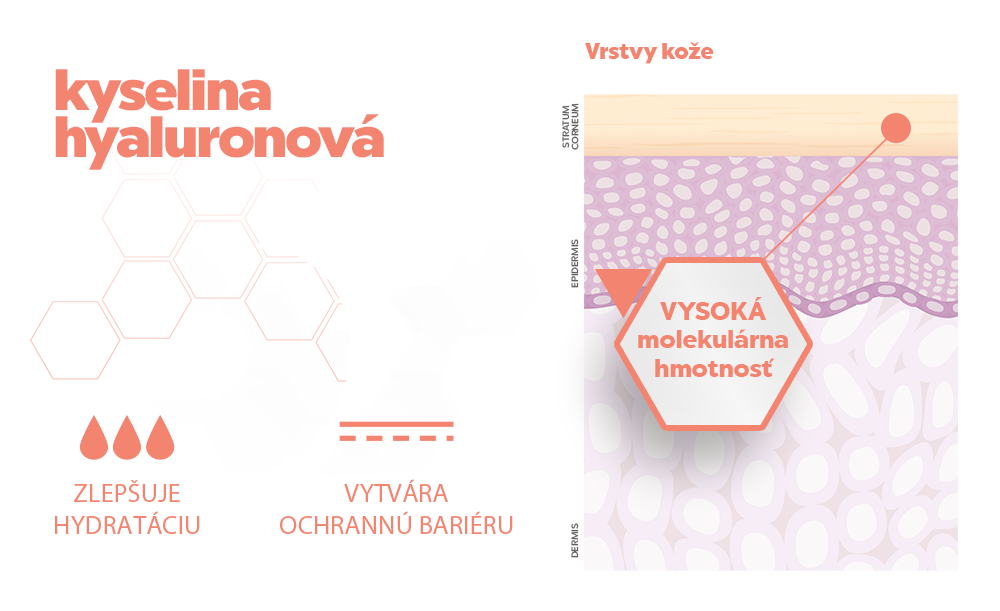
A transparent substance with an exceptional ability to bind moisture, it works like a sponge, absorbing up to a thousand times its own weight in water. It is found in every tissue in the body, particularly in areas that depend on moisture, such as the vitreous humour of the eye, connective tissue and synovial fluid in the joints. It is naturally present in the diet, so nutrition helps stimulate its production in the body. Its concentration in the skin decreases significantly with age, leading to reduced water retention in the skin's connective tissue and resulting in less elastic skin that is prone to wrinkles. It is used to reduce wrinkles, fine lines, sagging skin, scars and post-acne pigmentation. It creates space within tissues for the transport of substances essential for natural cell regeneration, enhancing the skin's ability to regenerate. It is used in the treatment of burns and skin ulcers to restore hydration. It protects against external factors, maintains firmness and elasticity, smooths deeper wrinkles, neutralises free radicals, prevents stretch marks, corrects skin imperfections, speeds up wound healing and minimises scarring. It improves the supply of nutrients from deeper structures to the surface layers. It is obtained from microorganisms through biotechnological processes, ensuring high purity and compatibility with natural cosmetics. The grade used is of the highest global quality, sourced from a leading manufacturer with Ecocert and COSMOS certifications for natural and organic cosmetics.
Its main mechanism of action is intensive moisturisation: it binds and retains water on the skin's surface, restoring the lipid barrier and supporting its protective functions. Its high molecular weight prevents deep penetration, so it remains in the upper layers as a hydrating film that protects against transepidermal water loss. It also has mild antioxidant properties, neutralising free radicals and helping to soothe irritated skin. The recommended concentration in creams is the maximum specified by the manufacturer, typically 0,1-1 % for surface hydration.
It is particularly recommended for dry, dehydrated, sensitive and mature skin, where it intensively replenishes moisture and reduces wrinkles. It is suitable for all skin types, including oily and acne-prone skin, as it does not clog pores and regulates hydration without leaving a greasy film. It is ideal for people with skin damaged by environmental factors or following intensive treatments.
A study published in the Journal of Clinical and Aesthetic Dermatology (2014) showed that topical application of a 0,1 % solution increases skin hydration by 96 % after a single use and maintains the effect for up to 6 hours. Further research in the International Journal of Biological Macromolecules (2018) confirmed that the high-molecular-weight form improves skin elasticity by 20 % after 4 weeks of daily use at a concentration of 0,5 %.
Certifications: Ecocert and COSMOS – the world's strictest standards for natural cosmetics.
This multi-benefit complex combines the properties of L-PCA, particularly its ability to strengthen the skin barrier, with the benefits of zinc, which is widely recognised for its purifying and sebum-regulating action, as well as its anti-inflammatory, healing and immune-protective properties. The complex therefore offers the combined beauty benefits of zinc and L-PCA for skin and hair. It is a synthetically produced cosmetic ingredient in which L-PCA is the sodium salt of pyroglutamic acid, an amino acid naturally found in the skin, obtained through biotechnological processes. Zinc is a mineral element that binds to L-PCA in this form for improved stability and penetration into the skin. The ingredient is intended for use in professional cosmetics, with an emphasis on purity and skin compatibility. It contains no natural plant extract, but has a bio-inspired composition for optimal effectiveness.
It works by regulating sebum through inhibition of the enzyme 5α-reductase, reducing sebum production and mattifying the skin. It has strong antibacterial properties, particularly against Propionibacterium acnes (C. acnes), helping to purify the skin and reduce blemishes. It also moisturises and restores the skin barrier thanks to L-PCA, which hydrates and protects skin integrity. The anti-inflammatory and healing effects of zinc soothe irritation, support the skin's immunity and optimise the penetration of other active ingredients. The recommended concentration in formulations is 0,5 to 2 % for maximum effectiveness without irritation.
We recommend it for oily, acne-prone and congested skin, where it regulates sebum and tackles blemishes. It is also suitable for sensitive and irritated skin thanks to its soothing and barrier-supporting properties. For dehydrated skin, it provides hydration without feeling heavy, while for mature skin, it supports immunity and healing. Uses include care for oily hair and scalps, mattifying products, supporting skin immunity and treating irritated areas. We do not recommend it for extremely dry skin unless combined with hydrating ingredients.
A study published in the Journal of Cosmetic Science (2015) demonstrated that Zincidone at a concentration of 1 % inhibits the growth of C. acnes by 99,9 % after 24 hours in vitro, significantly reducing inflammatory acne lesions. Further research in the International Journal of Cosmetic Science (2018) showed that at a concentration of 1,5 %, Zincidone reduces sebum by 42 % over 28 days in subjects with oily skin, while improving barrier function by 25 % as measured by TEWL (transepidermal water loss).
A multifunctional additive suitable for formulating preservative-free cosmetic products. Both ingredients have intrinsic antimicrobial properties that allow products to be formulated safely with a low potential for irritation and sensitisation. Phenethyl alcohol is an organic compound in the form of a colourless liquid. It occurs naturally in essential oils and has a pleasant floral scent. In cosmetics, it acts as a preservative and fragrance ingredient. It is found in make-up, eye make-up, personal care products, shampoos, perfumes and colognes. Phenethyl alcohol is safe in cosmetics and personal care products at concentrations of up to 1 %. At higher concentrations, it causes mild skin and eye irritation. It poses no risk to the foetus or to pregnant or breastfeeding women. It is vegan and permitted in organic cosmetics. Caprylyl glycol is obtained from coconut or palm oil, making it a naturally derived substance suitable for vegan and organic formulations.
Phenethyl alcohol is an organic compound in the form of a colourless liquid. It occurs naturally in essential oils and has a pleasant floral scent. In cosmetics, it acts as a preservative and fragrance ingredient. It is found in make-up, eye make-up, personal care products, shampoos, perfumes and colognes. Phenethyl alcohol is safe in cosmetics and personal care products at concentrations of up to 1 %. Caprylyl glycol is used in cosmetics as a surfactant and emulsifier, improving product texture and helping water and oil combine effectively. It is a humectant and skin-conditioning agent that maintains the skin's moisture balance. It also acts as a stabiliser and preservative and enhances the antimicrobial activity of other preservatives. In fact, it is often used in preservative blends. Its multifunctional nature (moisturising and antimicrobial) makes it useful in many cosmetic products. Its mechanism of action involves moisturising, restoring the skin barrier and providing antimicrobial protection; phenethyl alcohol inhibits the growth of bacteria and yeasts at concentrations of 0,5-1 %, while caprylyl glycol retains moisture and enhances the antimicrobial effect at levels of 0,5-2 %.
It is mild and gentle on the skin and can be used in products for children's skin. Allergic reactions to caprylyl glycol are very rare, and it is very well tolerated. It is recommended for dry, sensitive, dehydrated, oily and acne-prone skin, as well as mature skin and products for children aged 0+ years. Its low sensitisation potential makes it ideal for atopic skin, eczema or rosacea, where it minimises the risk of irritation with long-term use.
A study published in the Journal of Cosmetic Science (2014) demonstrated that a blend of phenethyl alcohol and caprylyl glycol at a concentration of 1 % inhibits the growth of Staphylococcus aureus by 99,9 % and Candida albicans by 95 % after 7 days of incubation, significantly extending the microbial stability of emulsions without traditional preservatives. Further research in the International Journal of Cosmetic Science (2018) confirmed that caprylyl glycol at a concentration of 1 % improves skin hydration by 25 % after 4 weeks of application in individuals with dry skin.
Citric acid is an organic acid found naturally in citrus fruits, for example. In cosmetic products, it is listed under the INCI name Citric Acid. Although consumers often associate it primarily with fruit acids and exfoliation, its main role in many formulations is technical – it is used to precisely adjust and stabilise pH.
The right pH is important for product stability, the effectiveness of the preservative system, the solubility of active ingredients and how well the skin tolerates the product. A formula may contain only a very small amount of citric acid to lower the pH to the desired level. In this case, it cannot automatically be considered an exfoliating active ingredient.
The Cosmetic Ingredient Review safety assessment states that citric acid is used in cosmetics as a pH adjuster, a chelating agent and, in some cases, a fragrance ingredient. After reviewing the available data, the panel concluded that citric acid and the citrates assessed are safe under current conditions of use and at current concentrations in cosmetics.
At higher concentrations and an appropriately adjusted acidic pH, citric acid can act as an alpha-hydroxy acid. It helps loosen the bonds between dead cells on the skin's surface, which may promote a smoother, brighter and more even appearance. However, its effect always depends on the concentration, final pH, product type, contact time with the skin and the formulation as a whole.
In a clinical study, a body lotion containing 20 % citric acid was applied to sun-damaged skin for three months. Biopsies showed an increase in the thickness of the viable epidermis and in the skin's glycosaminoglycan content. However, this was a highly concentrated experimental formulation, so these findings cannot be applied to products in which citric acid is used only to adjust pH.
At exfoliating concentrations, citric acid may cause stinging, redness or irritation, particularly on sensitive or compromised skin. Products with an exfoliating effect should therefore be introduced gradually and used alongside broad-spectrum SPF protection during the day.
When choosing packaging for LucyLab samples, we weren’t looking for a smaller version of the standard pack. We needed packaging that could keep a small amount of cosmetics in the best possible condition until it was opened. That’s why we use single-use cosmetic sachets with a volume of 2–5 ml, made from high-barrier, three-layer PET / ALU / PE laminate.
The packaging consists of 12 µm PET / 9 µm aluminium foil / 75 µm PE, with a surface weight of approximately 114 g/m². PET gives the pack strength and dimensional stability, PE forms a flexible inner layer suitable for reliable heat sealing, and the aluminium foil provides the key barrier. It blocks light and UV radiation and effectively protects the contents from oxygen and moisture. For sensitive cosmetic formulations, the sachet is a small protective vault.
Each cosmetic sachet is hermetically sealed and intended for single use. The product remains untouched by fingers and the outside environment until opened. Once open, simply squeeze the required amount directly into your palm or onto your skin. The result is easy, clean and hygienic application without a dispenser or additional components.
The 2–5 ml volume is practical as a sample of face cream, serum or another cosmetic product. The sachet is exceptionally light and flat and takes up very little space, so you can keep it in your handbag, wash bag or hand luggage.
Multi-layer PET/ALU/PE laminate provides exceptional protection while keeping packaging weight very low. As the individual layers are firmly bonded together, this type of laminate cannot currently be easily recycled in most standard recycling systems. Its environmental benefit lies mainly in its efficient use of materials and low weight. PET, aluminium and PE are among the materials also used in packaging assessed according to COSMOS and ECOCERT principles; COSMOS also takes multi-layer materials and free sample packaging into particular consideration.
The packaging is manufactured at facilities certified to ISO 9001, ISO 14001, ISO 50001 and ISO 14064-1. For LucyLab, however, what matters most is the result: a premium look, high barrier protection, hygienic single-use application and a practical format that lets you experience the product exactly as we created it.
5/5
I recommend
“Tento cistiaci gel cestuje so mnou vsade, aj moje dcery ho miluju.Kupujeme opakovane ????”
I recommend
“Čistiaci gél je skvely a veľmi dlho vydrží aj napriek pravidelnému používaniu. Krásne vyčistí moju pleť a nevysusuje ju . Konečne som našla čistiaci gél ktorý mi vyhovuje .”
I recommend
“Výborný produkt. Skvele čistí, pleť nevysúša, dlho vydrží. A pekne vonia!”
I recommend
“Používam každé ráno a večer, krásne odlíči pleť. Môj "must have" v menšom 100ml balení na cestovanie a väčšie 200ml do kúpeľne. :)”
I recommend
“Používam gél večer na odlíčenie pleti. Stačí malé množstvo a perfektne odstráni make up. Mám pleť so sklonom na periorálnu dermatitidu a vôbec mi nespôsobuje problémy”
Hello, I remove my make-up with cleansing milk and then cleanse my face with an oil-based product. Can I use this gel after these two steps, or would that be too much? Double cleansing is commonly used now, with an oil-based cleanser followed by a foam- or gel-based one.
Dobrý deň, ja sa odličujem čistiacim mliekom a potom čistím tvár prípravkom na baze oleja. Môžem po týchto dvoch krokoch použiť ešte tento gél alebo by už toho bolo veľa? Teraz sa zvykne používať dvojfázové čistenie kedy sa používa čistič na báze oleja a potom nejaký na báze peny alebo gélu.
Miroslava
Translated from
 SK
Hello, can children aged 9 and over use this gel? Thank you :-)
Dobrý den, můžou tento gel používat děti od 9 let? Děkuji :-)
Jana
Translated from
 CS
SK
Hello, could you please tell me whether the make-up remover also removes mascara and long-lasting lipstick? At the moment, I use your cleansing and make-up removing emulsion or oil-free make-up remover for mascara. Thank you.
Dobrý deň, prosím Vás čo sa týka make up tak odstráni aj špirálu a dlhotrvajúci rúž? Momentálne používam od Vás na špirálu čistiacu a odličovaciu emulziu alebo bezolejový odličovač. Ďakujem.
Veronika
Translated from
SK
When is it better to use this cleansing gel, please, and when should I use the soap nut gel? Thank you :-)
Kedy je lepšie, prosím Vás, použiť na čistenie tento gélik a kedy použiť gél mydlové orechy? Ďakujem :-)
Lenka
Translated from
SK
Good day, is the 3-in-1 cleansing gel also suitable for removing make-up and for sensitive skin? Thank you very much.
Dobry den, cistiaci gel 3v1 je vhodny aj na makeup a pre citlivu plet? dakujem pekne
Tamara
Translated from
SK


