


The impact of UV radiation on skin ageing: How to protect your skin naturally.

UV radiation is one of the main factors that cause premature skin ageing. Although many people think the sun’s rays are only harmful in summer, they actually affect our skin all year round. Whether it is cloudy or sunny, UV rays penetrate the skin and cause damage that shows up as skin ageing, wrinkles, dark spots, worsening rosacea, reduced skin hydration and inflammation.

How does UV radiation accelerate skin ageing?
Skin ageing caused by UV radiation, also known as photoageing, is the result of long-term exposure to sunlight. UV rays damage collagen and elastin in the skin, leading to a loss of firmness and elasticity. The result is deep wrinkles, uneven skin tone and increased dark spot formation.
Photoageing: How UV radiation causes premature ageing
Photoageing is the process of premature skin ageing caused by long-term exposure to UV radiation. Research shows that up to 80% of visible signs of ageing result from exposure to UV rays (Watson et al., 2014). The skin loses elasticity, wrinkles appear and the skin looks rough and tired.
According to a study published in the Journal of Clinical Dermatology (2018), up to 80% of visible signs of ageing are caused by UV radiation. Long-term exposure to UVB and UVA rays not only weakens the skin’s structure but can also trigger inflammation and excess melanin production, leading to dark spots and worsening rosacea.
Dark spots: The unwanted effects of UV rays
UV radiation stimulates excess melanin production, leading to dark spots, or hyperpigmentation. According to a study published in the Journal of Dermatological Science (2016), regular use of mineral sunscreens containing zinc oxide significantly reduces dark spot formation.
Rosacea and inflammation: UV as a trigger for skin problems
People with sensitive or rosacea-prone skin are particularly susceptible to inflammatory reactions caused by UV radiation. Research (Anderson et al., 2018) confirms that UV radiation increases the production of free radicals, leading to skin inflammation and redness.
Blue light and its effect on the skin
Blue light emitted by screens and LED lighting can also contribute to premature skin ageing. The combination of UV radiation and blue light can cause oxidative stress and accelerate wrinkle formation.
Protecting your skin with organic skincare
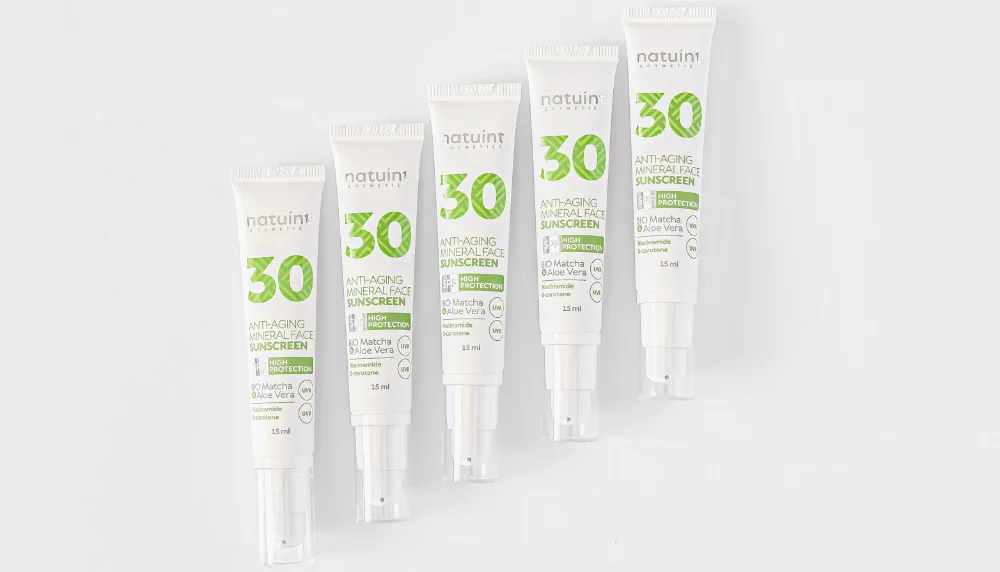
Organic natural skincare and natural products play a key role in protecting against UV radiation. Mineral SPF creams containing physical filters such as zinc oxide and titanium dioxide provide broad-spectrum protection without irritation. These creams create a protective barrier on the skin that reflects the sun’s rays, a mechanism you can think of as a mirror effect. UV rays bounce off the layer on the skin rather than penetrating it.
Benefits of mineral SPF creams
- Broad-spectrum protection against UVA and UVB rays
- Skin hydration thanks to natural ingredients
- Prevention of skin ageing and wrinkle formation
- Gentle care for sensitive and rosacea-prone skin
- Reduced dark spot formation
Why use an SPF cream all year round?
Contrary to popular belief, UV protection is not only important in summer. The sun’s rays penetrate clouds even during the colder months. That is why using a mineral SPF cream, such as one from Dulcia Natural, is important throughout the year. This helps provide better protection against skin ageing and maintain your skin’s health and elasticity.
How can you minimise the effects of UV radiation on your skin?
- Use organic skincare with mineral SPF every day.
- Keeping your skin hydrated is essential for maintaining elasticity and a youthful appearance.
- A face cream with mineral filters provides effective protection.
- Creams for dark spots can help even out skin tone.
- Avoid direct sunlight during peak hours (11:00 – 15:00).
- Reapply protection every 2-3 hours, especially when outdoors.
Healthy skin without wrinkles or dark spots
Skin ageing is a natural process, but we can significantly slow it down with the right UV protection. Natural skincare and the use of a mineral SPF cream are key steps towards maintaining healthy, hydrated skin without wrinkles or dark spots. Remember to protect your skin regularly, not just in summer but all year round.
According to the American Academy of Dermatology (2019), regular use of SPF creams is the only effective way to prevent premature skin ageing and dark spots. You should therefore include SPF in your daily skincare routine, whatever the season.
Choose quality protection
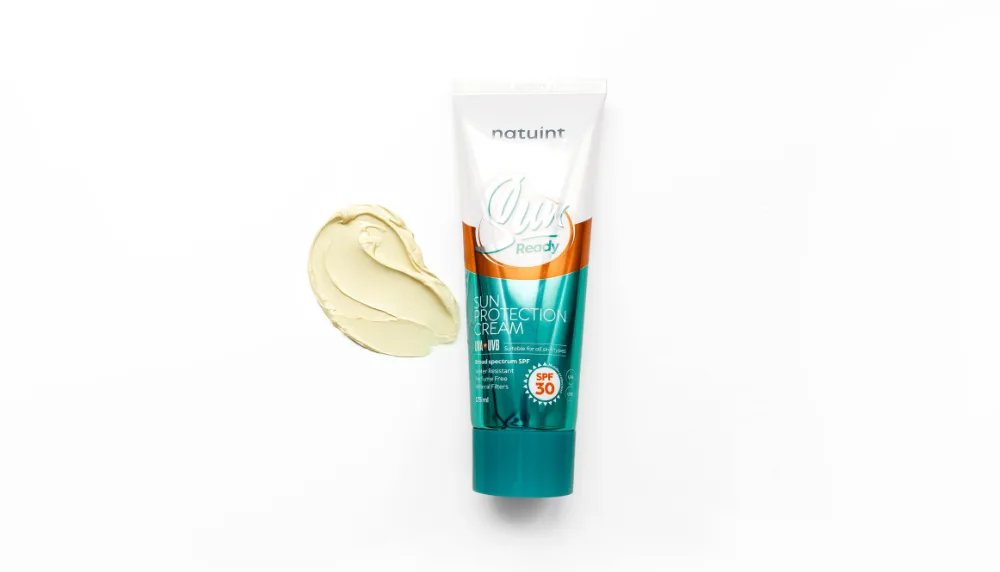
The mineral sunscreen from Dulcia Natural is an ideal solution for everyday skin protection. It offers comprehensive protection against sunlight and blue light while being gentle on both the skin and the environment.
Its gentle formula, free from chemical filters, protects your skin against UV radiation and blue light from monitors while hydrating and soothing it.
Why choose this cream?
This cream is formulated with mineral filters, specifically non-nano zinc oxide and titanium dioxide, which create a protective layer on the skin that reflects harmful UVA and UVB rays. Unlike chemical filters, they do not penetrate the skin, minimising the risk of irritation and making them suitable even for sensitive skin.
In addition to sun protection, the cream contains matcha extract and the microalga Phormidium persicinum, which help protect the skin against blue light emitted by screens while providing antioxidant and anti-inflammatory benefits.
How should you apply the cream?
- Step 1: Apply the cream as the final step in your morning skincare routine, before applying make-up.
- Step 2: Spread thoroughly over your face, neck and décolletage to ensure even coverage without missing any areas.
- Step 3: Reapply every 2 hours during prolonged sun exposure or after contact with water.
The cream has a light, non-greasy texture, making it suitable as a base for make-up too.
Choosing SPF according to your skin phototype
Skin phototypes are classified according to how the skin reacts to sunlight. Each phototype has a recommended SPF level:
- Phototype I: Very fair skin, often with freckles, and red hair. Skin always burns and never tans.
Recommended SPF: 50+ - Phototype II: Fair skin and light hair. Skin burns easily and tans very little.
Recommended SPF: 50+ - Phototype III: Fair to light brown skin and darker hair. Skin may burn but gradually tans.
Recommended SPF: 30–50 - Phototype IV: Darker skin and dark hair. Skin rarely burns and tans easily.
Recommended SPF: 20–25 - Phototype V: Dark skin and dark hair. Skin very rarely burns and tans quickly.
Recommended SPF: 20–25 - Phototype VI: Very dark to black skin. Skin is highly resistant to the sun.
Recommended SPF: 10–20
How often should you reapply sunscreen?
Whatever the SPF level, it is important to reapply sunscreen regularly:
- Every 2 hours: Sunscreen becomes less effective over time, especially when your skin is exposed to water or sweat, or when you towel dry.
- After swimming or sweating: Even water-resistant creams become less effective after contact with water or sweat, so they need to be reapplied.
- After towel drying: Rubbing with a towel can remove the layer of cream, reducing protection.